
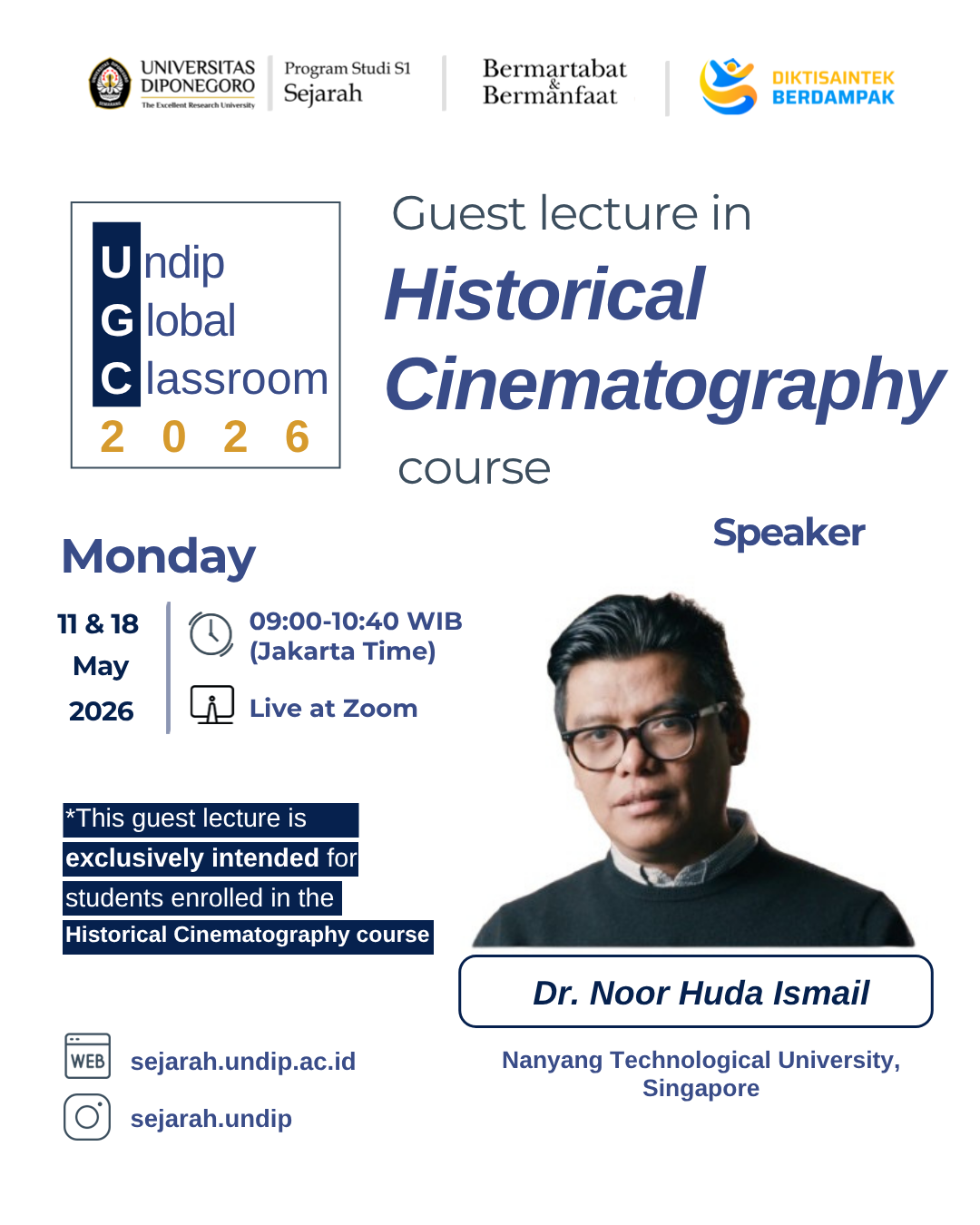
The Department of History, Faculty of Humanities, Diponegoro University (FIB UNDIP) successfully held the UNDIP Global Classroom event for the Historical Cinematography course on May 11, 2026. The event featured Dr. Noor Huda Ismail as a guest lecturer for the Historical Cinematography course. The event was attended by history and general studies students via Zoom, which was used to facilitate and support students in the Historical Cinematography course.
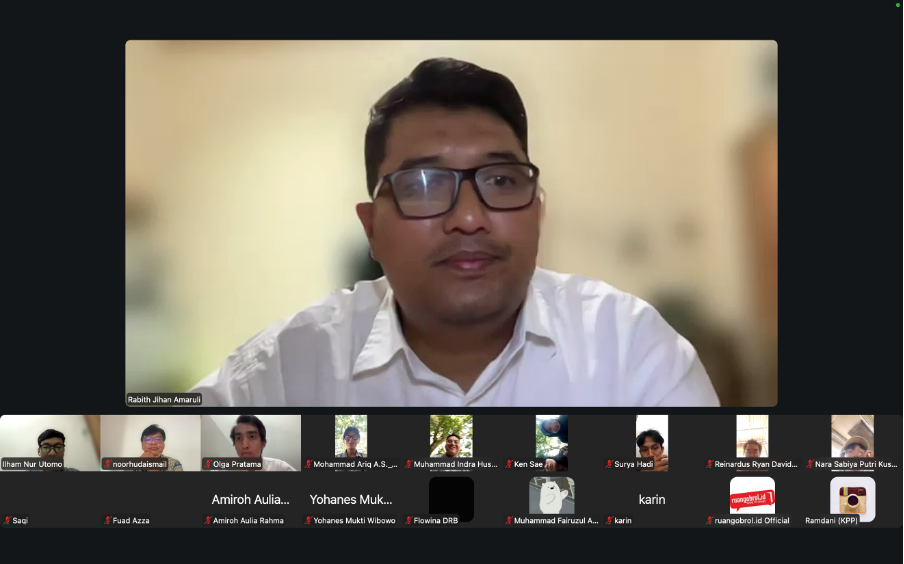
The event was officially opened by the Secretary of the History Undergraduate Program, Dr. Rabith Jihan Amaruli, M. Hum. In his speech, He explained that the UNDIP History Program offers a Historical Cinematography course. This course is designed to equip students with the skills to produce historical documentary films. The course’s output is a historical documentary film produced by students over the course of one semester. During this semester, students engage in selecting a theme, conducting research, filming, editing, and screening the historical film. This UGC activity is expected to assist history students in the process of creating historical documentary films as the course’s final project.
Dr. Noor Huda Ismail from Nanyang Technological University, Singapore, presented on historical cinematography: Storytelling, Conflict, and Memory Through Film. Dr. Noor Huda Ismail has produced numerous documentary films, one of which is his latest work, “Jihad Selfie.” He frequently creates documentaries that use storytelling to reveal the underlying reasons behind why people act in certain ways.
In his presentation, Dr. Noor Huda discussed how historical cinematography serves as a method for creating documentary films. He stated that documentary films act as a tool that can be used to preserve or document the memories of an individual or a community. A documentary film is the result of a combination of research based on relevant writings, news, and stories or events visualized in film form. Documentary films can be used as a tool to record the story or narrative of a person that has never been told or known by others before a conflict involving that person occurred. Thus, documentary films can serve as a platform to challenge or change stereotypes regarding events that occur to certain people.
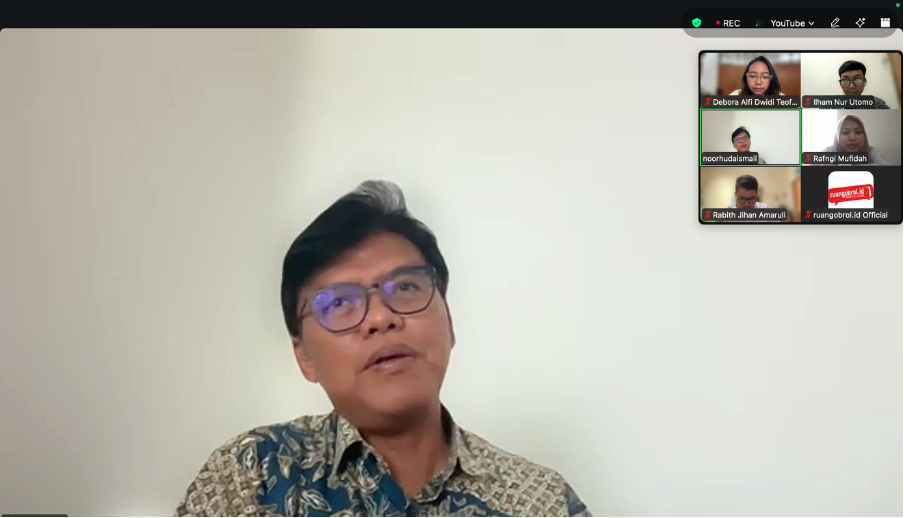
Dr. Noor Huda explained that documentaries can change our perspective on certain people or issues. Through documentaries, we can understand the reasons behind why people do certain things. Films can also serve as a medium accessible to anyone on a national or international scale.
This UGC event concluded with a screening of one of Dr. Noor Huda Ismail’s films titled “Road to Resilience.” This documentary tells the story of a man named Febri who once joined a terrorist organization in Syria. The film details the process of their repatriation from Syria back to Indonesia, the reasons for their joining the group, and their experiences after returning to Indonesia. It also highlights the opposition from a key figure regarding the repatriation of those affiliated with the terrorist organization. Following the screening, a discussion ensued.
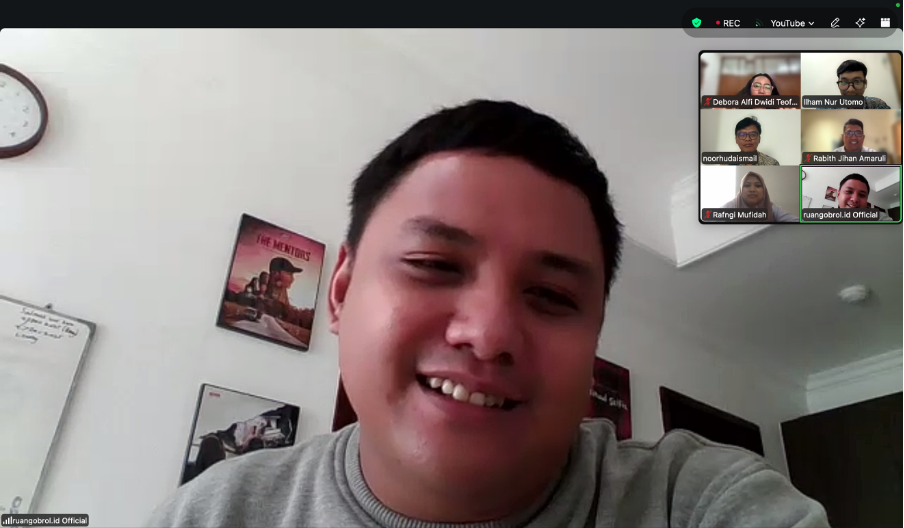
This UGC is expected to provide new insights for Undip History students and attendees. Additionally, this UGC is intended to assist students in completing their documentary film as a course assignment. Furthermore, it is hoped that this UGC will provide them with experience and equip them with skills in the field of documentary filmmaking.
