
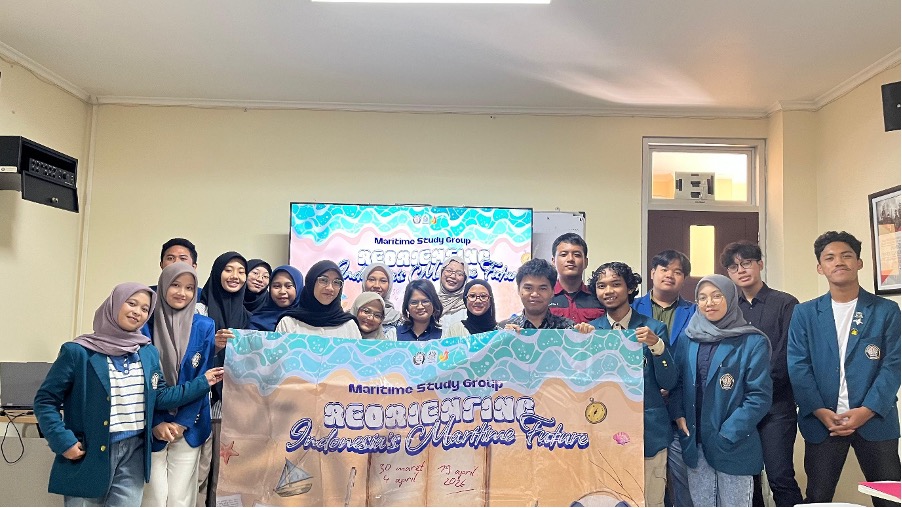
Himpunan Mahasiswa Sejarah at Universitas Diponegoro is once again holding the Maritime Study Group (MSG) with the theme “Reorienting Indonesia’s Maritime Future” on Sunday, April 19, 2026. Unlike previous activities held in Tambak Lorok, this research activity is being conducted in the Tambakrejo area, Semarang. The event serves as an opportunity for history students to learn how to conduct research with a focus on the lives of coastal communities and maritime affairs.
The event was officially opened by the Head of the Undergraduate of History Program, Prof. Dr. Dhanang Respati Puguh, M.Hum. In his remarks, he expressed his support for the MSG event as a means of encouraging student achievement, which is expected to develop into research projects submitted to the Pekan Kreativitas Mahasiswa (PKM).
The students previously conducted direct observations in the Tambakrejo area and interacted with the local community to gain a deeper understanding of the social, cultural, and economic life of coastal residents. Through this field-based approach, the students not only collected empirical data but also gained an in-depth understanding of how traditional values, customs, and social structures shape patterns of interaction within the coastal community. This field research experience also provided the students with an opportunity to observe the dynamics of social change resulting from economic development and modernization in the coastal area of Tambakrejo.
As a follow-up to the field activities, students, who were divided into several groups, then composed scientific articles based on the data collected during the observation and field research process. The preparation of these articles not only hones the students’ analytical and academic writing skills, but also integrates field findings with relevant theory to produce comprehensive and in-depth scientific work.
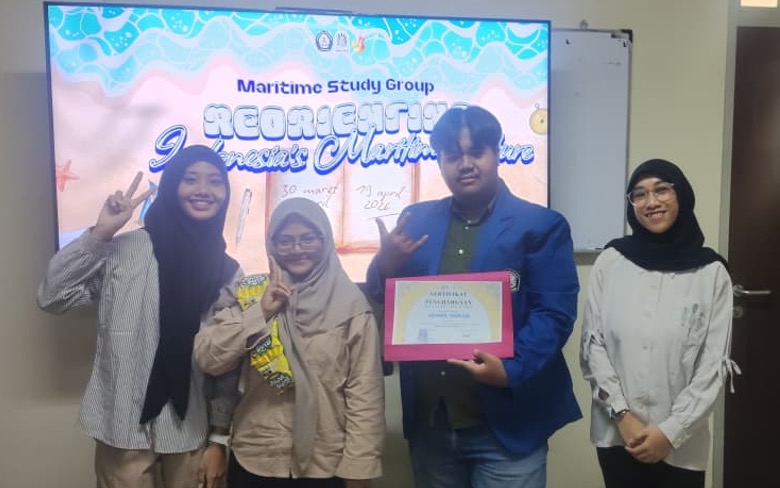
The articles were then presented before the evaluator, who is a lecturer in the Undergraduate of History Program, Khairana Zata Nugroho, M.Hum. This presentation was an important opportunity for students to receive constructive feedback, test the strength of their arguments, and enhance their scientific communication skills. In addition, direct interaction with the evaluator allowed students to deepen their understanding and adjust their research approaches based on the critiques and suggestions received, thereby improving the quality and credibility of the resulting scientific articles.
Through this activity, students not only hone their maritime-based historical research skills but are also encouraged to develop a deep academic awareness of coastal communities. This is important because coastal communities are an integral part of Indonesia’s rich and diverse cultural and historical heritage. By understanding the social, economic, and cultural contexts inherent to coastal societies, students can appreciate their strategic role in shaping national identity as well as their contributions to the development of national maritime history.
Furthermore, this activity is expected to foster a sense of academic responsibility that encourages students not only to be passive observers, but also agents of change concerned with the preservation and development of coastal communities, thereby providing tangible benefits to coastal populations as part of the effort to safeguard the sustainability of Indonesia’s cultural heritage (KZN).
